PDA, ADHD, Bipolar lived experience

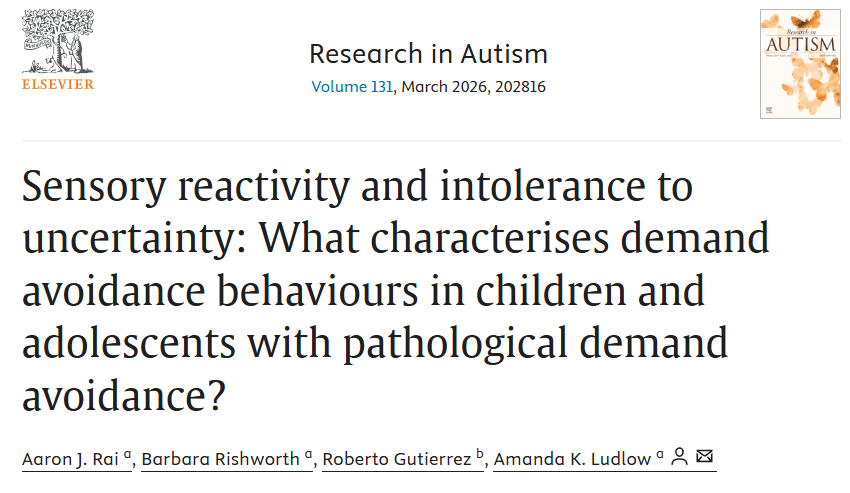
  • Revisiting “Sensory reactivity and intolerance to uncertainty: What characterises demand avoidance behaviours in children and adolescents with pathological demand avoidance?”

    (Rai, A. et al. (2026) ‘Sensory reactivity and intolerance to uncertainty: What characterises demand avoidance behaviours in children and adolescents with pathological demand avoidance?’, Research in Autism, 131. Available at: https://www.sciencedirect.com/science/article/pii/S3050656526000301?__cf_chl_tk=zH_BqQ8_J1a4RebkPkPALpQ6qQd8vMT9LI6peeJmw2g-1778269928-1.0.1.1-M9gZbg.Q6C0wQcrCf35QEryvUVuluZtUOt.GiIdLhAE (Accessed: 08 May 2026))

    So I’ve been returning to this paper, still wondering just how it came to a conclusion that diverges so strongly from the reported (anecdotal) lived experience of PDAers.

    Ultimately it comes down to the nature of the statistical procedure used. I’ve studied a fair amount of stats at Cardiff University, in my DipHE (and am returning to this in my OU studies). However, hierarchical and linear regression are methods we didn’t cover at undergraduate level – which poses a challenge. The crux is: is this a correlational or causational method?

    So I’ve done a google search, checking over a number of different resources. I also asked my friend with a masters in astrophsyics. From what I can ascertain, regression analyses are correlational (but if anyone out there knows better, please let me know!)

    This matters, because if the relationship between the variables is correlational, then one can not be said to cause the other. So this paper states that sensory sensitivities predict scores on the extreme demand avoidance measure, in PDA children: ” Finally, the dimensions of tactile sensitivity, Taste/Smell, and UR/Seek sensation significantly predicted EDA in the Autism + PDA group (F(7, 467)= 23.84, p < .001, R2= .26).” (Rai et al, 2026). But if this isn’t causational, then sensory sensitivity can’t be framed as the cause of demand avoidance behaviours in PDA children – something that is very easy to miss within this paper.

    So it does seem that what they’ve picked up on, is that we have far less capacity to “meet demands” when also overwhelmed by our senses. The other thing they noted was that EDA-Q scores lessened by age, which I suspect means that measure is better at detecting demand avoidant behaviour in younger children, personally.

    I feel the main benefit of this piece of research is that it evidences the need for PDAers to have sensory accommodations. However, I feel it is very easily interpreted as evidencing that PDA demand avoidance is underpinned by sensory overwhelm – which is a different proposition! I would have appreciated if the discussion had made this clearer. Overall, it leaves me with the feeling of an “outsider perspective” on our experience.

    Note: regarding the language “significantly predicted” – In Null Hypothesis Significance Testing, we look to see if our observed result is less than 5% likely to have happened by chance – p < 0.05. As such, “significant” doesn’t mean important/large/meaningful as it usually would. It means, there was less than a 5% likelihood that the findings occurred by chance.
  • Ongoing attempts to cope better with food

    Food has been a longstanding difficulty for me. Meal planning, shopping, cooking, washing up, even just the eating are all experienced as demands. On top of that, eating food can be a difficult sensory experience. As can the visuals of a supermarket, and the wetness of washing up.

    I’ve tried a few things over time. A therapist recommended that I bulk cook, and label by type of food. “Spicy”, “bland”, “fish”, etc. Ultimately, I haven’t yet reached a place where cooking from scratch feels possible. It’s difficult following a sequence, chopping is a difficult motion, and of course, the ever present demands.

    I’ve tried cooking with carers, which can help. I may well make time to do this again, as practice would be good. Doesn’t quite remove demands though. There just becomes a demand to use carer sessions that way, and it’s easy to quietly opt out.

    So I’ve decided to try some meal subscription services. The first is Stocked food. They came today, with good warning of when they would arrive specifically. Had to work out how I was gonna defrost the dry ice package, especially without the cat breathing it all in. Doesn’t help that I have a wasp phobia, so ventilating is not my favourite thing to do!

    Managed to get through that though, which probably did the phobia some good. Cooked a couple of blocks up of the hearty ragu, and spooned it over some toasted sourdough. Didn’t do perfectly, the toast was not that toasted, and the sauce was over reduced. I had turned the heat down, then it didn’t seem to melt, and I think I over compensated afterwards.

    However, it was still a tasty meal. My brother had mentioned that they have a lot of beans, which would have been something I absolutely would not have coped with as a kid. However, nowadays, beans are more palatable for me.

    The second one I’m going to try is frive. Those are somewhat fancy ready meals. So, no more difficult than I’m doing now, but a much wider range of meals. Better ingredients, too.

    It feels good to try and get some fruit and veg. It can be very easy for me to find that the only food I can stomach is junk food. Not a very helpful safe food! Variety really helps me keep eating, as does fish, for some reason.

    (Note: this is not in any way an ad, and I have not been paid to mention these companies. They’re just what I’m currently trying).

  • BeNeurokind

    Just found this super cute etsy shop with a range of affirming PDA related products.

    Gosh, I’d have loved a ‘yay it’s PDA’ card back in September 2022..

  • just thoughts

    This is a blog about life with PDA… but it can’t help also being a chronicle of life with bipolar. That side of things shows up mostly in how active psychosis affects how I post.

    It’s difficult to enforce no posting activity in a manic state. My inhibitions are lowered and my impulsivity is heightened. It’s much harder to think through what I’m sharing, and things that don’t make sense feel as though they do.

    Living alone also means I don’t have anyone around who can step in. No one who can say “maybe it’s best to maintain radio silence right now” while a mood episode builds.

    Hopefully, all this can at least have the positive outcome of giving readers insight into a bipolar 1 crisis.

  • Sensory reactivity and intolerance to uncertainty – my takes on a PDA study

    Sensory reactivity and intolerance to uncertainty: what characterises demand avoidance behaviors in children and adolescents with pathological demand avoidance? Rai, Rishworth, Gutierrez, and Ludlow (2026) in Research in Autism

    Well.. this is an interesting study, and I’m not sure I mean that in a good way. The authors found that sensory sensitives are the main predictor of demand avoidance in PDA kids (as measured by the “Extreme Demand Avoidance Questionnaire” or EDA-Q). Specifically, tactile sensitivity, taste and smell, and sensory seeking.

    They also state that:

    • scores on the EDA reduce with age, specifically in PDAers.
    • intolerance of uncertainty only predicts EDA in neurotypical kids

    From that, they theorise our demand avoidance helps us cope with anxiety, especially in the context of sensory overwhelm. Therefore we should look at demand avoidance as a “child’s response to their environment”, and provide suitable sensory supports.

    The measures used in the study all relied on parental report.. and I wonder if this is where this disconnect between the findings and PDAers reported lived experience creeps in. I’ve never seen a PDAer describe the reason for their avoidance of demands to be sensory related. I do see however, that we have less capacity for demands when our senses are overwhelmed. Perhaps this is what this study is detecting.

    All in all, it just reeks of an outsider perspective trying to make rational sense of the irrational nature of pathological demand avoidance. This study frustrates me, to be quite honest.

  • Hat Pattern

    Just wanted to share the link to the pattern of the hat WIP I posted to instagram

    Tiny Pompom Hat by Teti Lutsak

  • Finding the glimmers

    Trying something my therapist suggested: finding ways to be present, and notice the glimmers for the next week.

    So here are some things that bring me a little joy in my immediate surroundings:

    Of course, my Lulu
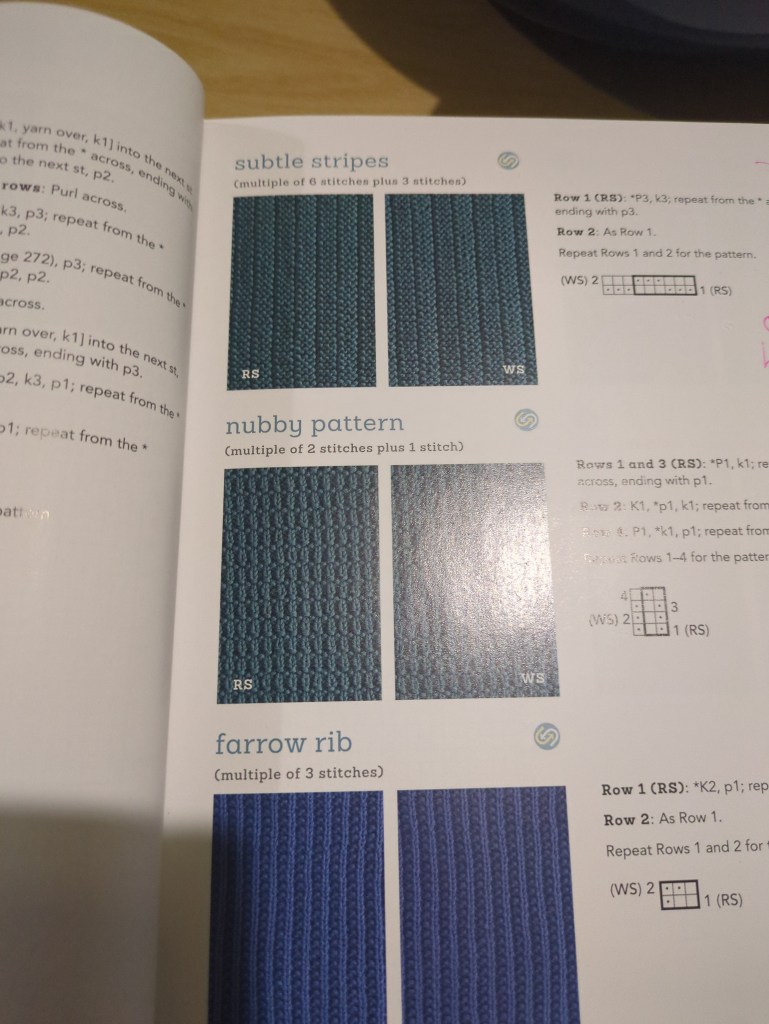
    Knitting in general – the top one is the stitch pattern for a scarf I’ve just startred
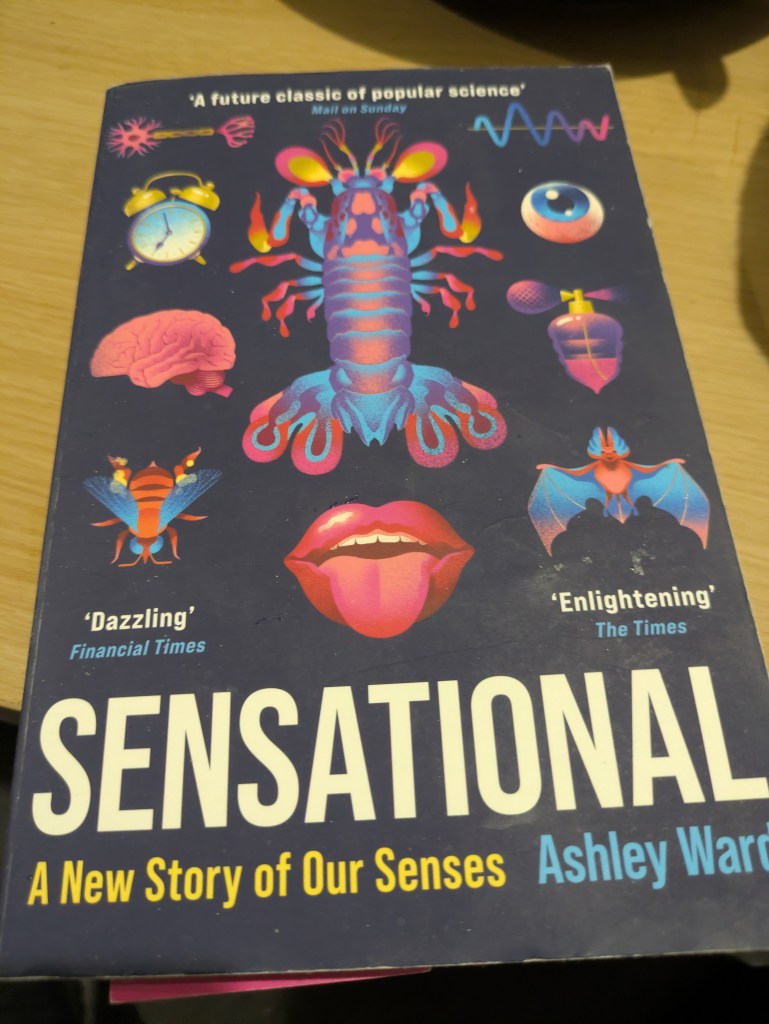
    Perception related topics
    Signed copy of Klara and the Sun
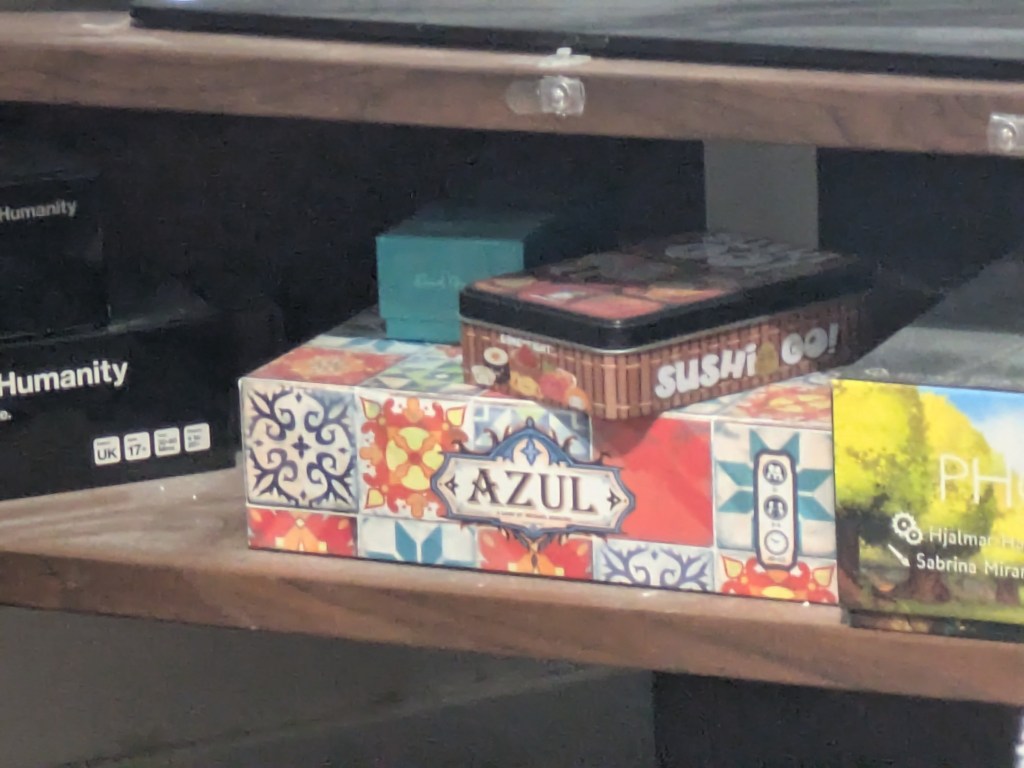
    My board games
    The kindness by post project
  • Today’s thought

    Everything on my photos app right now is: Lulu.

    That represents two things – I love her very much, but also I don’t have enough else going on in my life. It’s hard when you don’t drive in a pretty spread out, rural county.

  • A soft return

    Hello again. I’ve been away for a while, and I’m going to ease back in gently. PDAfae might look a little different from here on: less raw, broader, more short form posts and images. More of me, with no pressure, just presence.

  • Working with my brain, not against.

    The first benefit of discovering PDA and realising it applied to me was finding I could finally work “with” my brain. Meaning I could approach life in a way that didn’t leave me fighting with myself every step of the way. Dissociating from demand anxiety. Beginning to learn not to fawn (still working on this). Advocating for myself. Taking demand free time.

    This is true for my other neurodivergences as well (neurodevelopmental or otherwise).

    With dyspraxia, I find it easier to make progress on a craft when I work on a repetitive project. In knitting that was my blanket squares, in crochet it’s doing rows of double crochet that will eventually become an infinity scarf. (See my latest instagram post!) This drills the basic steps into my procedural memory (“muscle memory”). I also try to only learn one new stitch at a time with new projects, or maybe just one new skill – like a joining technique.

    I also focus on physical activity I find easier to coordinate. I don’t worry about team sports where I tend to let the team down. In fact, I don’t tend to bother with competitive sport at all.

    With dyscalculia, long before my diagnosis (but well after my suspicions), I learnt stats procedures “in words”. That is, I learnt the concepts in verbal form, rather than running the formulas over and over. This isn’t as easy to apply to numeracy (it’s hard to write out the concepts of the procedure for calculating a percentage I find.) It helped that Cardiff University taught the procedural concepts thoroughly. This meant I was able to verbalise the steps of a formula, rather than just being given the procedure as formulas. I probably need to practice looking at a formula and breaking it down into it’s constituent verbal concepts.

    With ADHD, it’s things like K.C. Davis’s “five things cleaning”. I struggle to sequence my actions, and approaches like this finally make it possible for me to tidy my room. It can also mean making sure I get more physical activity as this slows down my mind.

    When it comes to bipolar, it’s about working to get enough sleep. Taking meds religiously. Watching for warning signs.. but also keeping enough factors that promote well-being in your life.

    It’s also about meeting your sensory needs. I now know I find visual input very over-stimulating for example. So I wear sunglasses on sunny days. I go to smaller supermarkets where there’s fewer products and aisles. I allow myself to eat in a way that meets my sensory needs and don’t apologise for it.

    And on top of that, it’s allowing myself to stim and fidget. I was forever told to “sit still”, “stop fidgeting” as a kid. Now I know it’s a neurological need, and I meet it.

    Knowing you’re neurodivergent really is more than half the battle.